Black Widow Spider
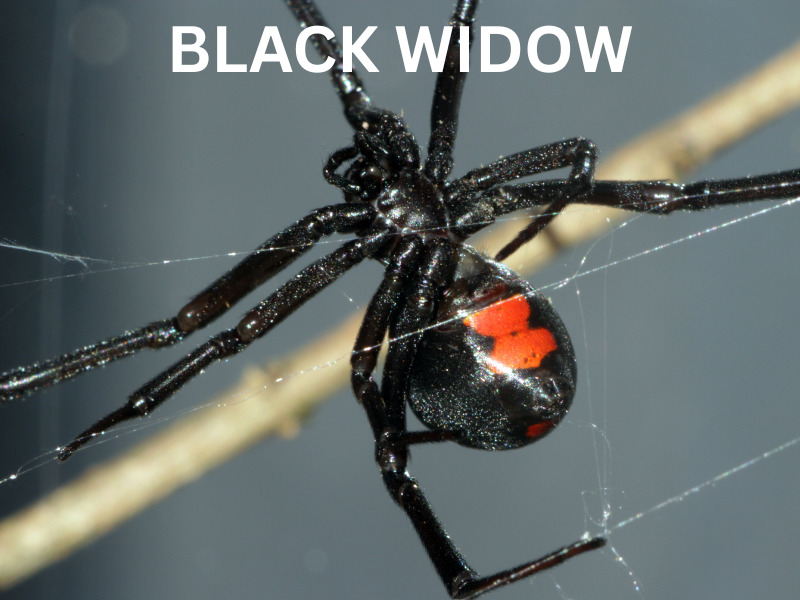
Venomous black spider with distinctive red hourglass marking on abdomen.
About Black Widow Spider
Identification
Female: shiny black, 1/2 inch body length. Distinctive red or orange hourglass on underside of abdomen. Eight eyes in two rows. Large, bulbous abdomen. Male: smaller, brown, harmless.
Signs of Infestation
Irregular, tangled webs in undisturbed areas. Egg sacs (cream-colored, papery spheres). Spiders in dark corners, woodpiles, sheds, or garages. Web with the spider hanging upside down. Males don't build webs.
Health & Safety Risks
Black widow venom is 15 times more toxic than rattlesnake venom. Bites cause severe muscle pain, cramping, nausea, breathing difficulty. Symptoms intensify over 8 hours. Rarely fatal but requires immediate medical attention, especially for children, elderly, and those with health issues.
Prevention Tips
Eliminate clutter in basements, garages, and storage areas. Seal cracks and crevices. Shake out shoes and gloves before wearing. Wear gloves when working in sheds or moving stored items. Remove webs regularly. Keep firewood away from home. Install door sweeps.
Need Help with Black Widow Spider?
Our licensed pest control professionals can eliminate your pest problem quickly and safely.