Mosquitoes
Blood-feeding insects that breed in standing water and transmit serious diseases.
About Mosquitoes
Identification
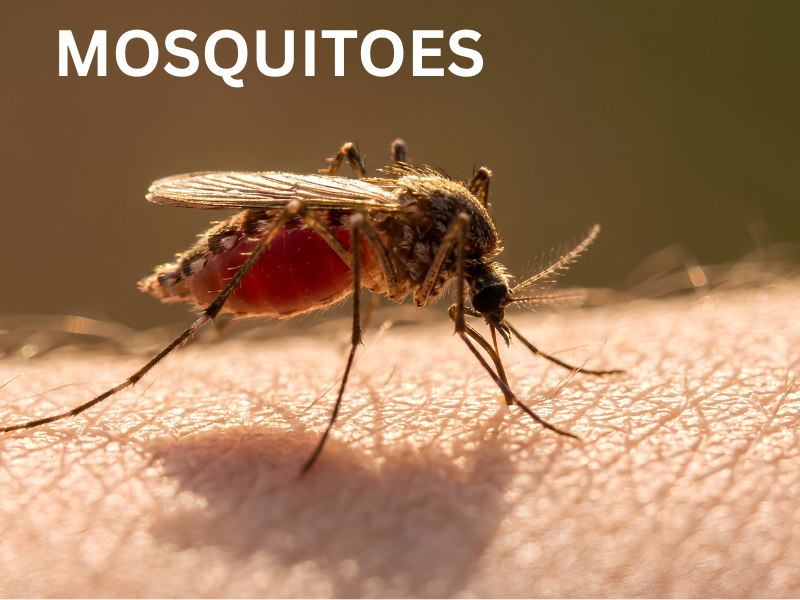
Small (1/8 to 1/4 inch long). Slender body with long, thin legs. Long proboscis for feeding. Scaled wings. Females have feathery antennae; males have bushier antennae. Various colors: brown, black, or gray with white markings.
Signs of Infestation
Multiple mosquito bites, especially dawn/dusk. Mosquitoes indoors, especially in humid areas. Larvae (wrigglers) in standing water. Buzzing sound near ears. Standing water on property. Increased mosquito activity after rain.
Health & Safety Risks
Mosquitoes transmit West Nile Virus, Zika, dengue, malaria, and other serious diseases. Bites cause itchy welts and can lead to secondary infections. Some people experience severe allergic reactions. Diseases can cause fever, neurological damage, or death in severe cases.
Prevention Tips
Eliminate standing water (buckets, tires, gutters, birdbaths). Change pet water dishes daily. Keep swimming pools maintained. Repair torn window screens. Use fans outdoors to disrupt flying. Install proper drainage. Keep grass cut short. Use mosquito dunks in permanent water features.
Need Help with Mosquitoes?
Our licensed pest control professionals can eliminate your pest problem quickly and safely.